


Latest News

Ask The Expert - GDP Controls
GDP Controls for Returned Medicines, Falsified Medicines Risk and Safety Features
Under EU Good Distribution Practice (GDP), wholesalers must have robust controls in place to ensure that returned medicines are managed safely and that falsified medicines cannot re-enter the legitimate supply chain. Since the introduction of the Falsified Medicines Directive (FMD), additional safeguards such as safety features and unique identifiers have also been implemented to further strengthen supply chain security.
Written procedures
Wholesalers should have clear Standard Operating Procedures (SOPs) describing how returned medicines are handled. These procedures should also cover complaints, product recalls and suspected falsified medicines. The procedures should outline staff responsibilities, investigation steps and decision-making processes, usually under the oversight of the Responsible Person (RP).

Quarantine and segregation
When medicines are returned, they should be physically separated from saleable stock and placed in a designated quarantine area. They should remain there until they have been assessed and approved for further action. This helps prevent any medicines of uncertain quality from accidentally being redistributed.
Assessment before returning to stock
Returned medicines should only be returned to saleable stock after they have been reviewed by an authorised person such as the Responsible Person. During this assessment it must be confirmed that the packaging is unopened and undamaged, that the product has been stored correctly, that the batch number and traceability are known, and that the medicine originally came from the approved supply chain. There must also be no signs of tampering or falsification.
Verification of storage conditions
For medicines that require controlled storage conditions, particularly temperature-sensitive products, there must be evidence that the correct conditions were maintained during storage and transport. This may include temperature monitoring records or data from temperature loggers. If there is no reliable evidence, the product should not be returned to stock.
Risk assessment
A risk-based approach should be used when evaluating returned medicines. Factors such as the type of product, how long it has been outside the wholesaler’s control, storage requirements and the type of customer returning the product should be considered. If there is any uncertainty about the quality or authenticity of the medicine, it should not be restocked.
Documentation and traceability
All returned medicines must be properly documented to maintain full traceability. Records should include the batch number, quantity returned, reason for return, the outcome of any investigation and the final decision regarding the product, such as restocking, quarantine or destruction.
Handling suspected falsified medicines
If a medicine is suspected to be falsified, it should be immediately segregated from other stock and investigated. The relevant competent authority and the Marketing Authorisation Holder (MAH) should be notified where appropriate. The product should be securely stored and must not be returned to saleable stock.
Safety Features under the Falsified Medicines Directive
Under the Falsified Medicines Directive, most prescription medicines placed on the market must contain two safety features designed to prevent falsified products entering the supply chain.
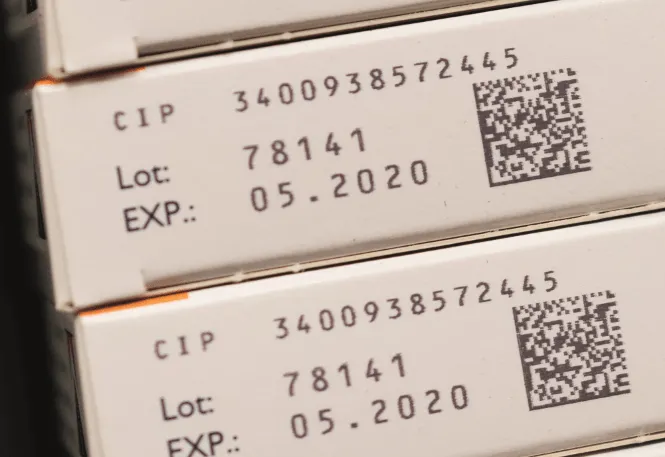
The first is a unique identifier, usually presented as a 2D data matrix barcode on the packaging. This contains key information such as the product code, serial number, batch number and expiry date.
The second is an anti-tampering device, which allows wholesalers and pharmacies to check whether the packaging has been opened or altered.
Wholesalers must verify the safety features in certain situations, for example when medicines are returned, when products are received from suppliers that are not the original manufacturer or MAH, or when there is a suspicion that a medicine may be falsified. Verification involves checking the unique identifier against the national medicines verification system.
Recommissioning of the Unique Identifier
In some cases, the unique identifier may need to be recommissioned after it has been previously decommissioned. Recommissioning means restoring the status of the unique identifier in the verification system so that the medicine can re-enter the supply chain.
Recommissioning is allowed under specific conditions. For example, if a product has been supplied to certain authorised organisations such as wholesalers, manufacturers or healthcare institutions and is later returned, the unique identifier may be recommissioned provided certain requirements are met.
These conditions include:
- The medicine must be returned within 10 days of being decommissioned
- The product must not have been supplied to the patient
- The packaging must be unopened and undamaged
- The anti-tampering device must be intact
- The medicine must still be within its expiry date
- The wholesaler must be confident that the product has remained within the secure supply chain
If these conditions are not met, the unique identifier cannot be recommissioned and the medicine should not be returned to saleable stock.
Staff training
Staff should receive appropriate training so they can recognise possible signs of falsified medicines. This may include damaged packaging, unusual labelling, missing safety features or suspicious supply routes. Employees should also understand the procedures for reporting and managing these issues.
Overall, GDP controls, combined with the safety features introduced under the Falsified Medicines Directive and the proper management of unique identifiers, help ensure that medicines circulating within the supply chain are authentic, traceable and of appropriate quality. These measures are essential for protecting patients and preventing falsified medicines from entering the market.
A big thank you to Patricia for sharing her insights on GDP compliance and regulation. If you’re exploring the most efficient and compliant route to getting pharmaceutical products into and onto the EU market, we’d be delighted to support you. Please get in touch with us at admin@oriongxp.com.
